
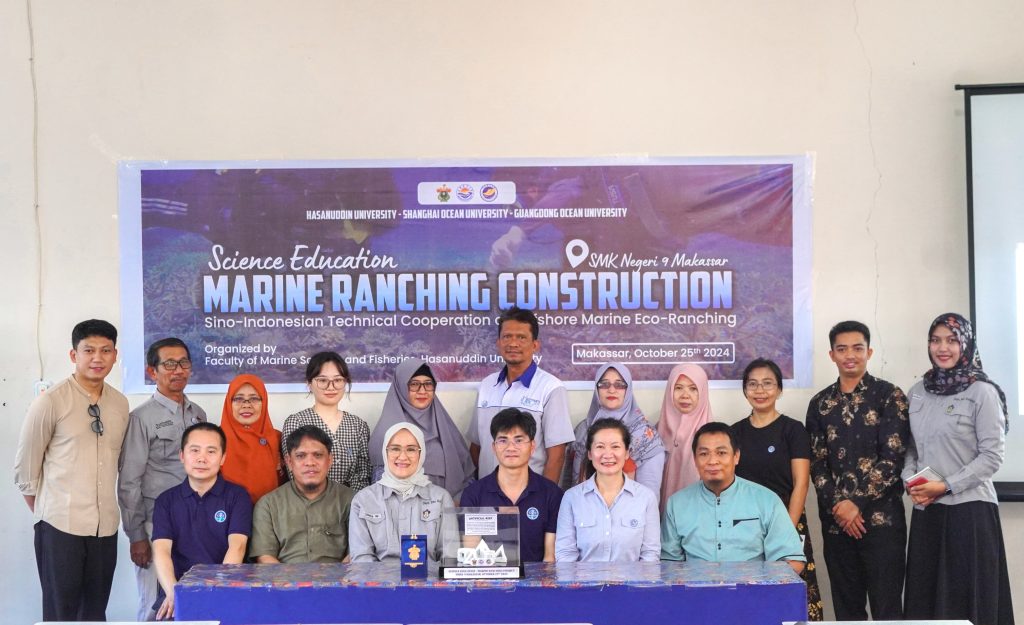
Makassar, October 25, 2024 – SMKN 9 Makassar hosted a Science Education event as part of an international collaboration between the Faculty of Marine Science and Fisheries, Universitas Hasanuddin (FIKP UNHAS), Shanghai Ocean University, and Guangdong Ocean University. This event aimed to deepen students' understanding of marine conservation through the use of artificial reefs in sea ranching programs.
The Vice Principal for Industrial Relations expressed gratitude and enthusiasm for the presence of foreign experts, highlighting that China is known as a leader in technological advancements, including in marine fields. “Our school has five programs related to maritime studies, so the presence of guests from China and Indonesia is truly impactful. We hope this visit will offer new insights and inspire our students to pursue further knowledge,” he remarked.
In his opening speech, the Vice Dean for Partnerships, Research, and Innovation emphasized that this activity is a continuation of the bilateral collaboration between Indonesia and China in the fields of marine and fisheries. “This event is part of the MOU between Universitas Hasanuddin, Shanghai Ocean University, and Guangdong Ocean University. Beyond education, this partnership also supports marine ecological development, as artificial reefs will later be installed on Bonetambung Island to promote a healthier marine ecosystem,” he explained.
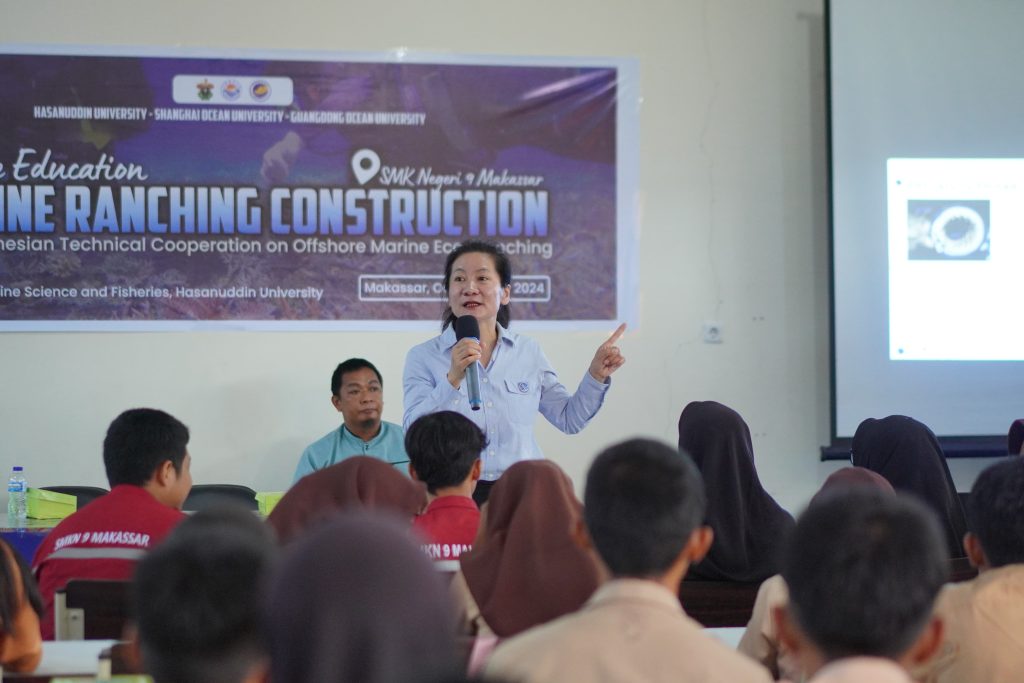
During the presentation, Prof. Zou Leilei from Shanghai Ocean University provided a comprehensive overview of the importance of marine ecosystems and the potential and challenges of Indonesia’s seas. He noted that Indonesia, with the second-longest coastline globally, has remarkable maritime potential but faces several threats, such as pollution and habitat degradation. “One of the mitigation efforts that can be undertaken is the installation of artificial reefs, which provide habitat for marine life and enhance biodiversity,” stated Prof. Leilei.
He elaborated on the different types and materials used in artificial reefs, from concrete structures to repurposed vessels serving as marine habitats. “Aside from providing a refuge for fish, artificial reefs can also serve tourism, aquaculture, and even marine energy production,” he added.
The event concluded with a Q&A session, where students enthusiastically asked about the safety of artificial reef materials and ways to educate the public on the importance of marine conservation. Prof. Zou assured that the materials used are environmentally safe and can last for decades, depending on the material chosen. “Support from all parties, including the government, communities, academics, and entrepreneurs, is essential to ensure the success of conservation efforts,” he said. This event provided an invaluable experience for the students of SMKN 9 Makassar, inspiring them to delve deeper into marine science and fisheries and to understand the crucial role of technology and international collaboration in preserving marine ecosystems.
 English
  Bahasa Indonesia